The four materials in modern B2B pet aftercare services.
Across receiving, process and family return, four material families appear repeatedly: reinforced kraft cardboard (cases, folders, returns), ceramic fiber (process mat), stainless steel (identity disc and engraving), and engineered wood (urns, frame mouldings). Each has a clear “best at” and a clear “worst at.”
Reinforced kraft cardboard
Best at: print surface, fold strength, modest tooling cost.
Worst at: long-term moisture exposure, heavy weight capacity, archival feel.
Where it sits in your catalogue: the case record folder, the closure evidence envelope, the certificate presentation folder, the outer return box.
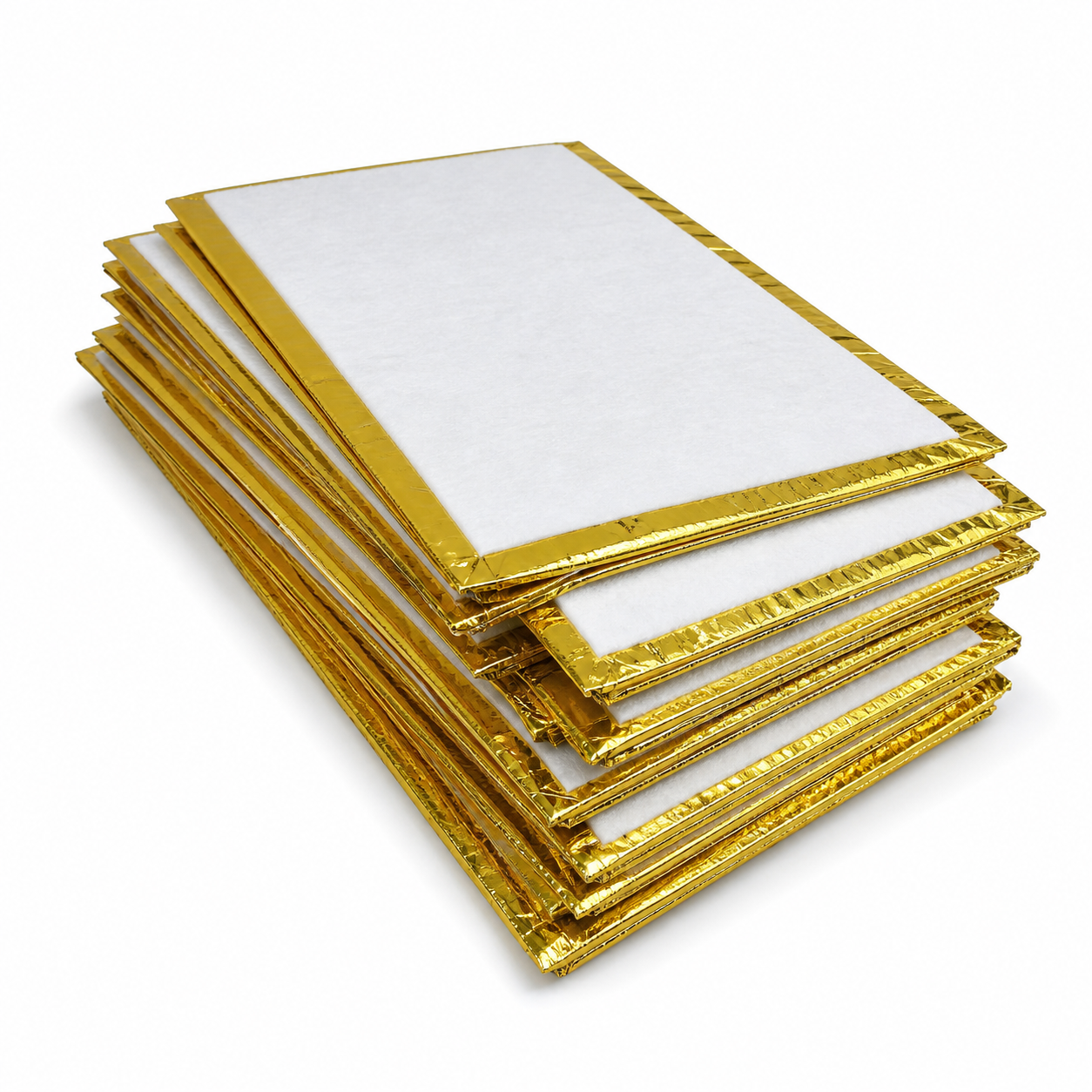
Ceramic fiber
Best at: high-temperature stability for the process mat.
Worst at: weight and cost; only used where it must be used.
Where it sits in your catalogue: the process mat inside the chamber. There is no real substitute here.
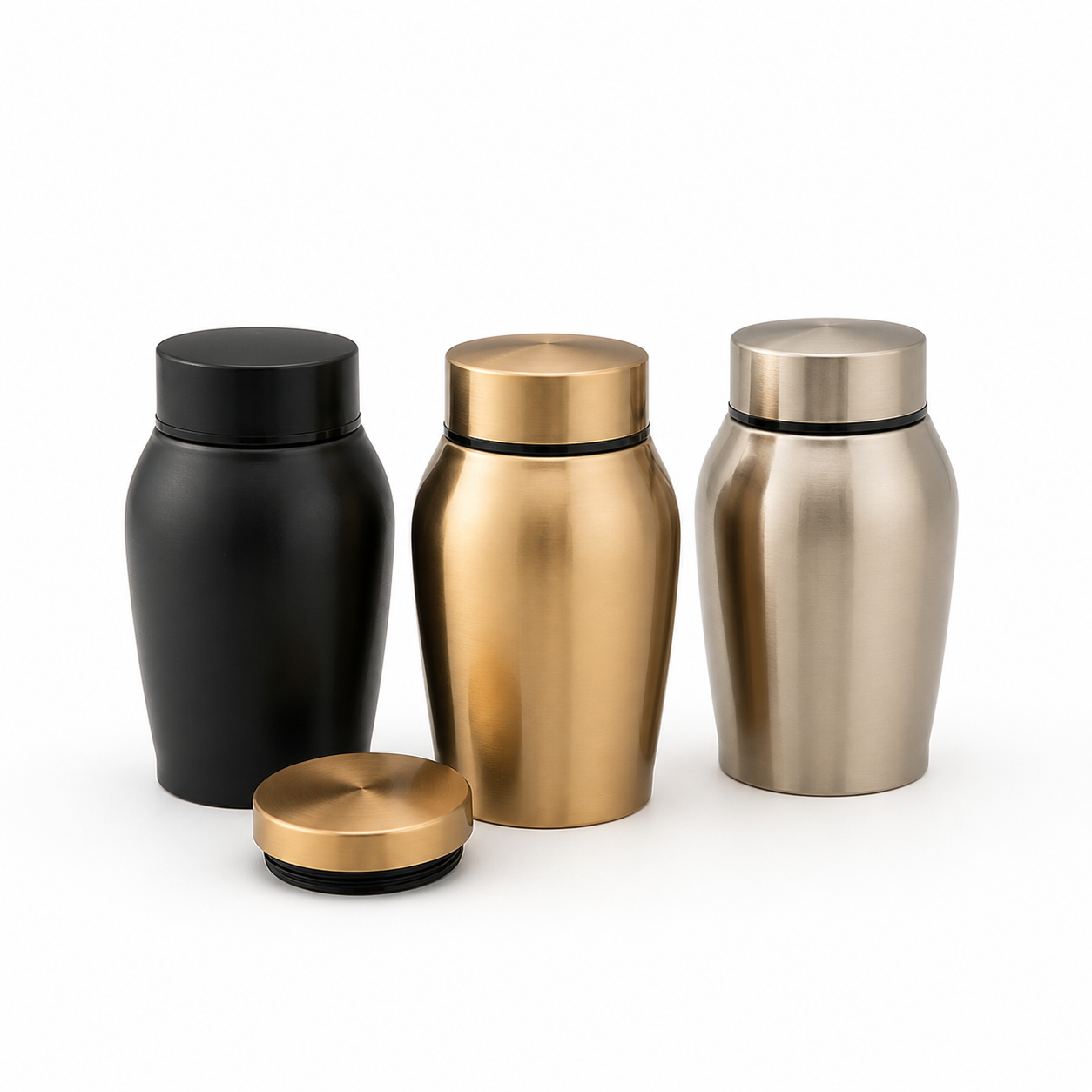
Stainless steel
Best at: archival engraving, alkaline resistance, longevity.
Worst at: weight; engraving cost; visual finish.
Where it sits in your catalogue: the Stainless Identity Disc. The disc has to survive the process and a generation of being handled.
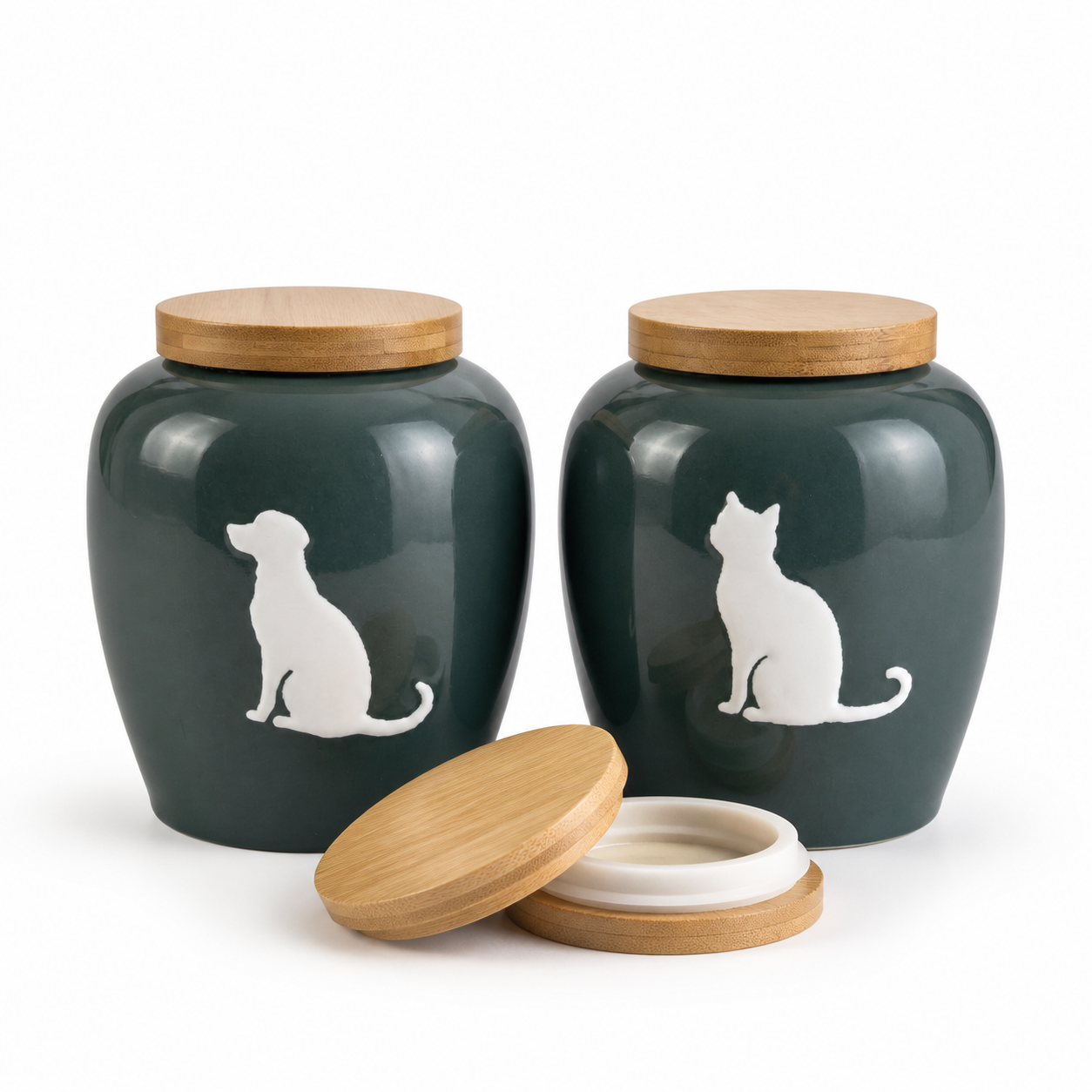
Engineered wood (and bamboo, walnut, beech)
Best at: the urn’s emotional surface — warmth, weight in the hand, finish options.
Worst at: long-term humidity without finish maintenance.
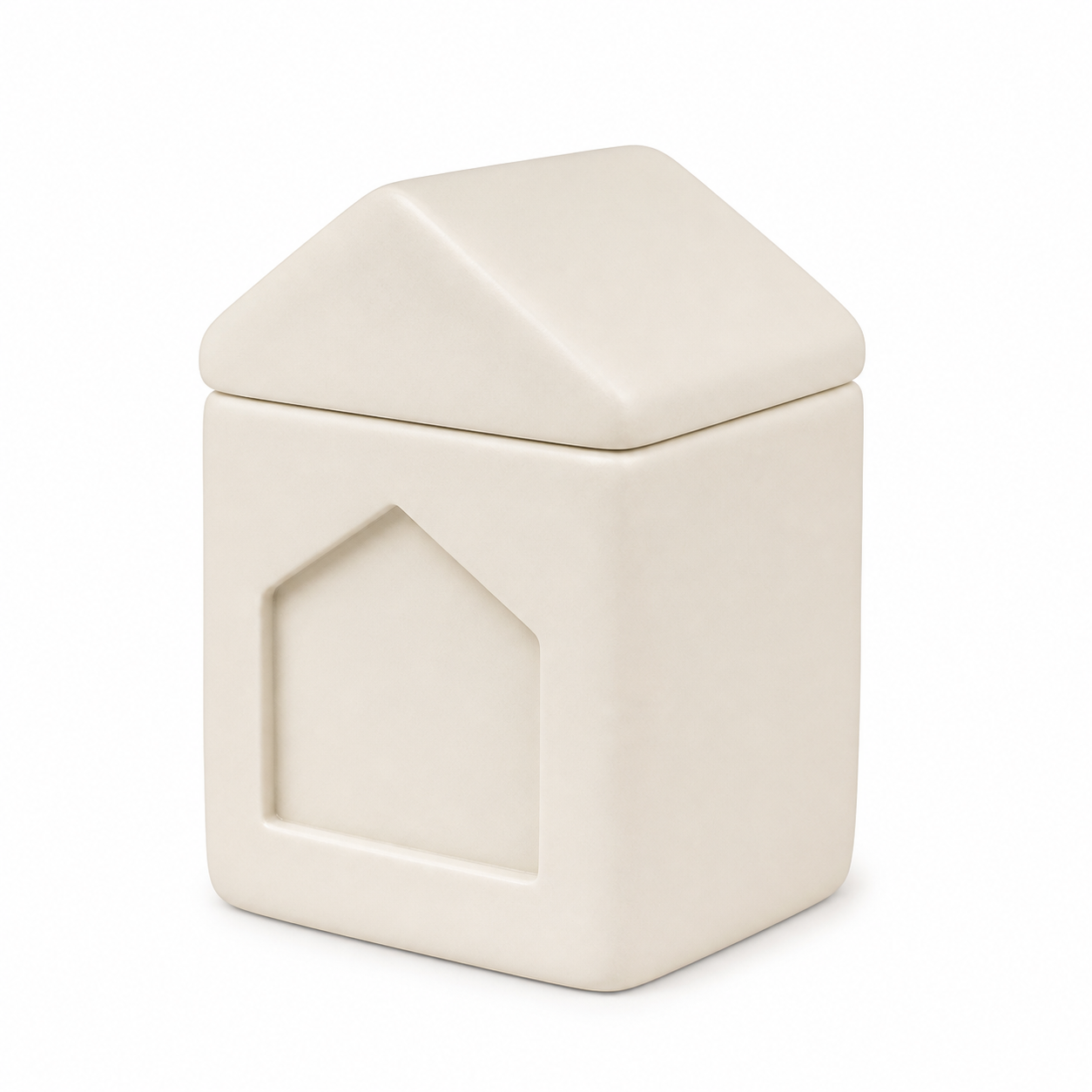
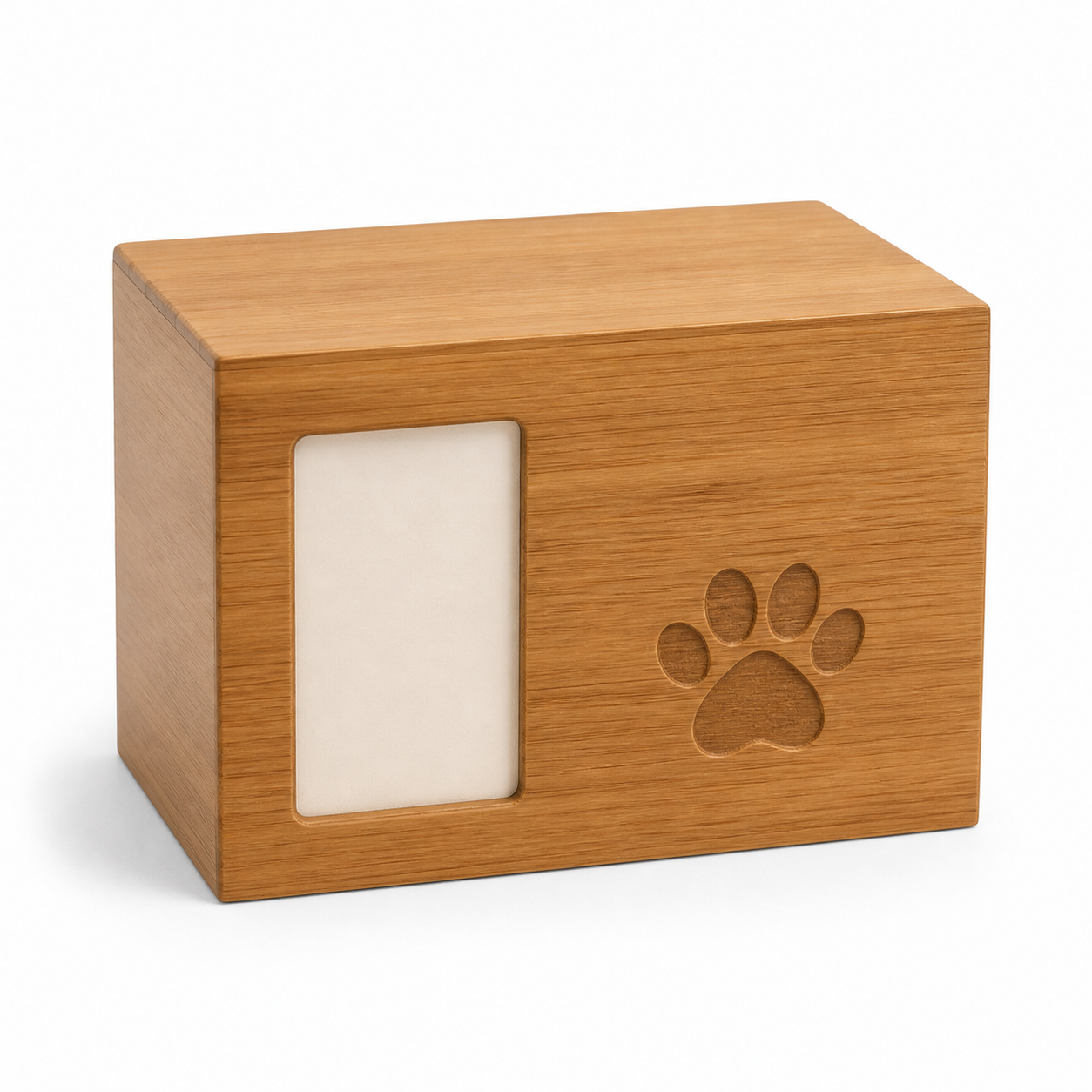
Where it sits in your catalogue: the Wood Pet Memorial Urn; secondary positions in the house-shaped photo urn.
Where the cheap option costs more than the premium.
Kraft folders that are not reinforced are the cheapest line item in the catalogue and the most common return complaint. A non-reinforced folder fails after three handovers. The reinforced version costs ~15% more and survives the service.
Stainless discs at <1.0 mm thickness buckle during engraving and during process. A 1.5 mm-thick disc looks identical in the catalogue but survives engraving and process heat.
Engineered wood at <8 mm wall thickness looks identical in photos but transmits the case ID through the bottom of the urn. A 12 mm wall hides the case ID and survives being taken home.
A small decision matrix.
- Need a printable surface? Use reinforced kraft.
- Need a process-stable surface? Use ceramic fiber — nothing else.
- Need longevity? Use stainless.
- Need warmth? Use engineered wood at minimum 12 mm wall thickness.
Closing thought.
The right material depends on what the product has to do. A supplier who can’t explain the material choice isn’t a supplier worth buying from at scale.
Materials B2B buyers compare on a cremation system.
Ceramic, glass, wood and stainless options and where they each fit.
Per-product material specifications on the catalogue.
Each reference product links to its wall thickness, finish options and material origin.
Open the product catalogue →